How Many Days Do You Need in Italy?
How many days do you need in Italy? It is the first question almost everyone asks — and it is completely natural to ask it. We are wired to plan this way: how many days for this city, how many for that one, add them up, and there is your trip.
But we will be straight with you: it is almost the wrong question. And that is not your fault — it is simply how planning a trip trains us to think.
Why there is no perfect number
Here is the plain truth: the days would never be enough. You can never land on a perfectly-right answer — because Italy, with its art cities, its hill towns, its countless borghi, is essentially infinite. Behind every street, in every village, there is beauty, history, a tradition waiting. You cannot reduce that to a tidy schedule of “three days here, two days there.”
So assigning a fixed number of days to each city is the wrong tool for the job.
Turn the question around
Do exactly the opposite. Start from the days you actually have — and then ask the two questions that matter far more than any day-count:
Is this your first time in Italy? And what have you already seen? Those two answers shape everything that follows.
If it is your first trip (and about a week)
If you have never been, and you have up to a week or so — and we will be straight: coming from far away, a week is on the short side — then there are a few things you should see at least once in a lifetime. The ones you simply do not skip on a first Italy:
- Rome
- Florence
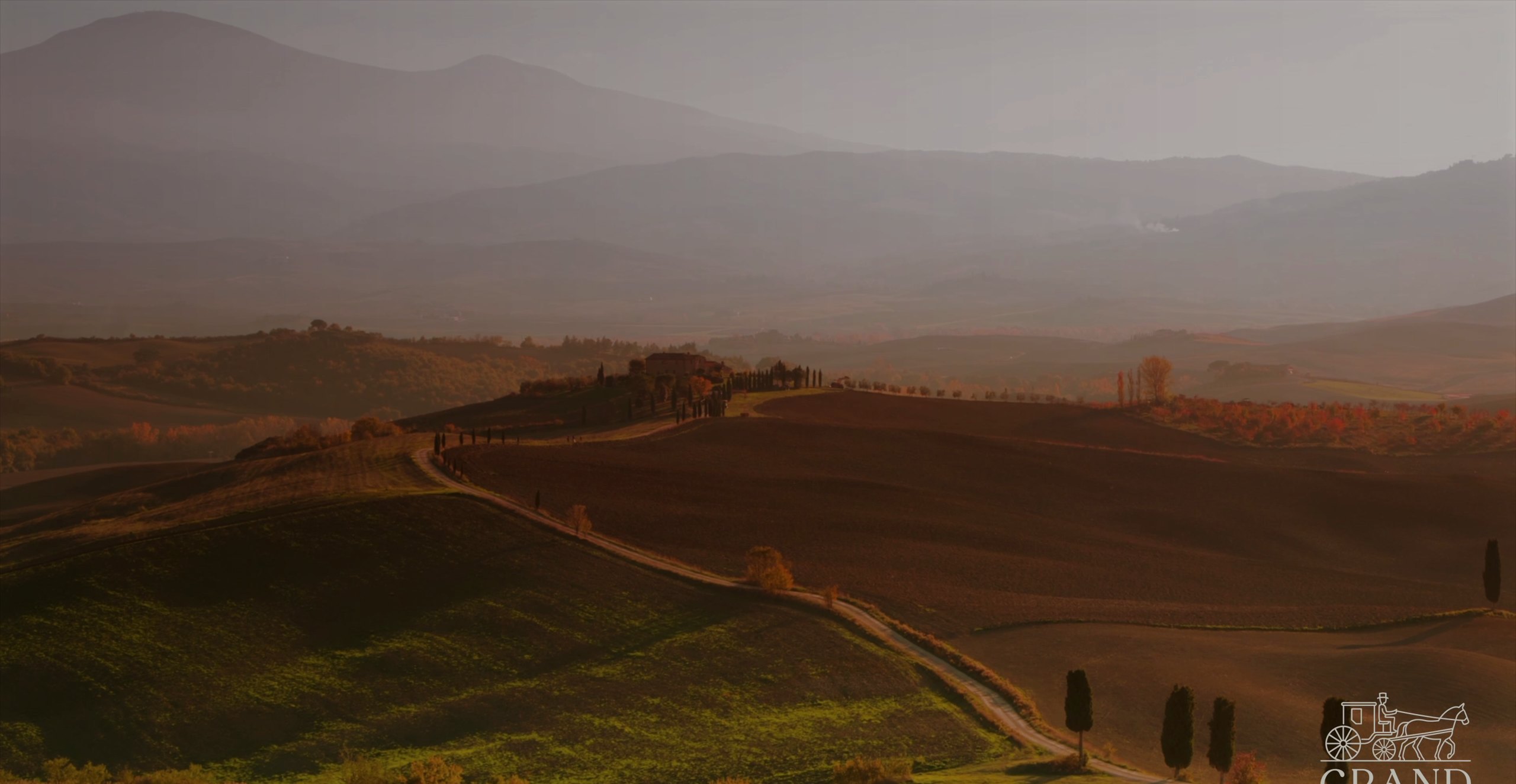
- The Val d’Orcia — the Tuscany you have pictured in your mind
Those are the anchors. From there, the shape of the trip is yours to design.
The real secret: go slower, not farther
Here is where most trips quietly go wrong — and where yours does not have to. The instinct is to cross the whole peninsula in a handful of days, chasing one famous name after another. We always advise against it.
Move slower instead. Because the authentic Italy — the real one — is very often just off the famous names. Here, even thirty miles can open onto something incredible, something you would never have imagined was there. Stay closer, and you sacrifice nothing: you still see the icons, and you also gain the short, unhurried drives that are a pleasure rather than a stress — the ones where the real discoveries actually happen.
That is the whole difference between rushing through Italy and understanding it.
Take one example among many. In Lombardy, within easy reach of Milan, sit two small cities that almost no visitor has heard of — Cremona and Brescia, barely thirty miles apart, a few hours by bicycle.
Cremona has made violins for five centuries — the most sought-after in the world — and its liutai still work in workshops scattered through the old centre. Founded as a Roman colony, it is crowned today by the Torrazzo, the tallest brick bell tower in Europe (and the third tallest on earth, though older than both that outrank it). Sit down to eat and it is mostarda and bolliti on the table.
Thirty miles east, Brescia is another world entirely: a castle on the hill above, the largest Roman archaeological park in northern Italy spread out below it, Renaissance squares, and one of the oldest circular Romanesque cathedrals in the country. Here the plates change too — casoncelli, and spiedo turning slowly over the fire.
Two small cities, unknown, utterly different, thirty miles apart. That is what “go slower, not farther” means — and it is the Italy the checklist never reaches.
And here is the part mass tourism quietly loses. Italy runs deep in every corner — even a small city like Cremona carries centuries in its stones — and the real pleasure is not just to see a historic centre but to recognise it: to know where you are standing; to read a square’s whole purpose from its very name — a Piazza del Comune is the old seat of civic power; to catch a single architectural detail and know exactly what it is telling you. That is a different joy entirely from photographing a handsome façade — and it simply is not possible the way travel is consumed today. It asks for another approach, the only one that delivers it: Knowledge Travel.
So — how many days?
There isn’t a fixed, necessary number. There never was.
What there is, is balance — the right shape for your journey, built around the days you have and what you are truly looking for. More than a count of days, it is the equilibrium of the trip that matters.
Give us your days and your story, and we will design the rest — so nothing feels rushed, and nothing gets missed.
Give us the days you have and the trip you dream of — and we will shape a journey with the right balance, icons and hidden corners, without the rush.
Request a free consultation →