Tipping in Italy: What Is Expected, and What Isn’t
Let me open with the plainest possible answer, so there is not the faintest shadow of doubt: in Italy, a tip is almost never expected, and it is never obligatory. Our whole system is simply not built on it. It is not designed, and it is not priced, around the idea that a tip is an essential part of the service you are paying for — the way it is in the United States. No one who serves you is counting on a tip as a matter of course; that is not how it works here, and it is worth saying so straight away, before anything else. Once you have taken that in and set down the anxiety you may have carried with you, we can look at the few sensible distinctions and the handful of customs that have grown up over the years, particularly in the world of travel.
At the restaurant — the part that really matters
Start with the restaurant, because it is where nearly all the confusion lives, and let me first say plainly what we mean by a restaurant at all: you sit down at a table, you order from a waiter, and you eat off a plate with a knife and fork. That is a restaurant. The various hybrids — takeaway, counter food, and the rest — are something else, and they do not work the same way. A proper Italian restaurant is the thing I have just described, and it charges, as a matter of course, the coperto.
The coperto is the one word you truly need to understand, because visitors so often mistake it for a tip, and it is not one. It is a cover charge, a small fixed amount per person — usually just a few euro a head — for the table itself: the linen, the napkins, the bread, the general service of sitting and being looked after. It is normal, it is expected, it is printed on the menu, and it is not optional. But it is emphatically not a gratuity, and paying it does not mean you have short-changed anyone.
The coperto is a cover charge, not a gratuity. Pay it, and you owe nothing more.
The tip to the waiter, on the other hand, is not obligatory — and here is the real difference from a country like the United States, where it is more or less automatic. With us it is not. You choose your dishes from a menu with clear, printed prices, the coperto is added, and that is the whole of what you owe. Beyond that, you may of course decide to leave something for a waiter who was especially kind or attentive — and people do. We Italians do not leave tips very often, but in a fine restaurant, or where the service has been genuinely good, we do; we leave something when we have been struck by something, or when we simply want to show our thanks to the person who looked after us, often on a special occasion — a celebration, a long lunch, a dinner that mattered. But I will keep repeating it, because it is the point: our system does not assume it. Wages here are not set on the understanding that the waiter will make up the rest in tips. That is not the arrangement.
And now the warning, because you should keep your eyes open. In the so-called tourist-trap places — and they exist, and as we say here, “ci provano,” they try it on — you may be asked, at the moment of paying, whether you would like to leave a tip, and handed the card machine with a percentage to enter. You are not obliged to. Some go further and try to add a service percentage automatically, and that is not right. You are entitled to question a bill like that; an automatic charge slipped on without your agreement is not something you must simply accept, and in a real dispute you are within your rights to challenge the receipt and, if it comes to it, to involve the authorities. I make something of a personal fight of this, not to alarm you but to arm you — because a good part of travelling Italy well is knowing which places to keep away from in the first place.
At the bar and the café
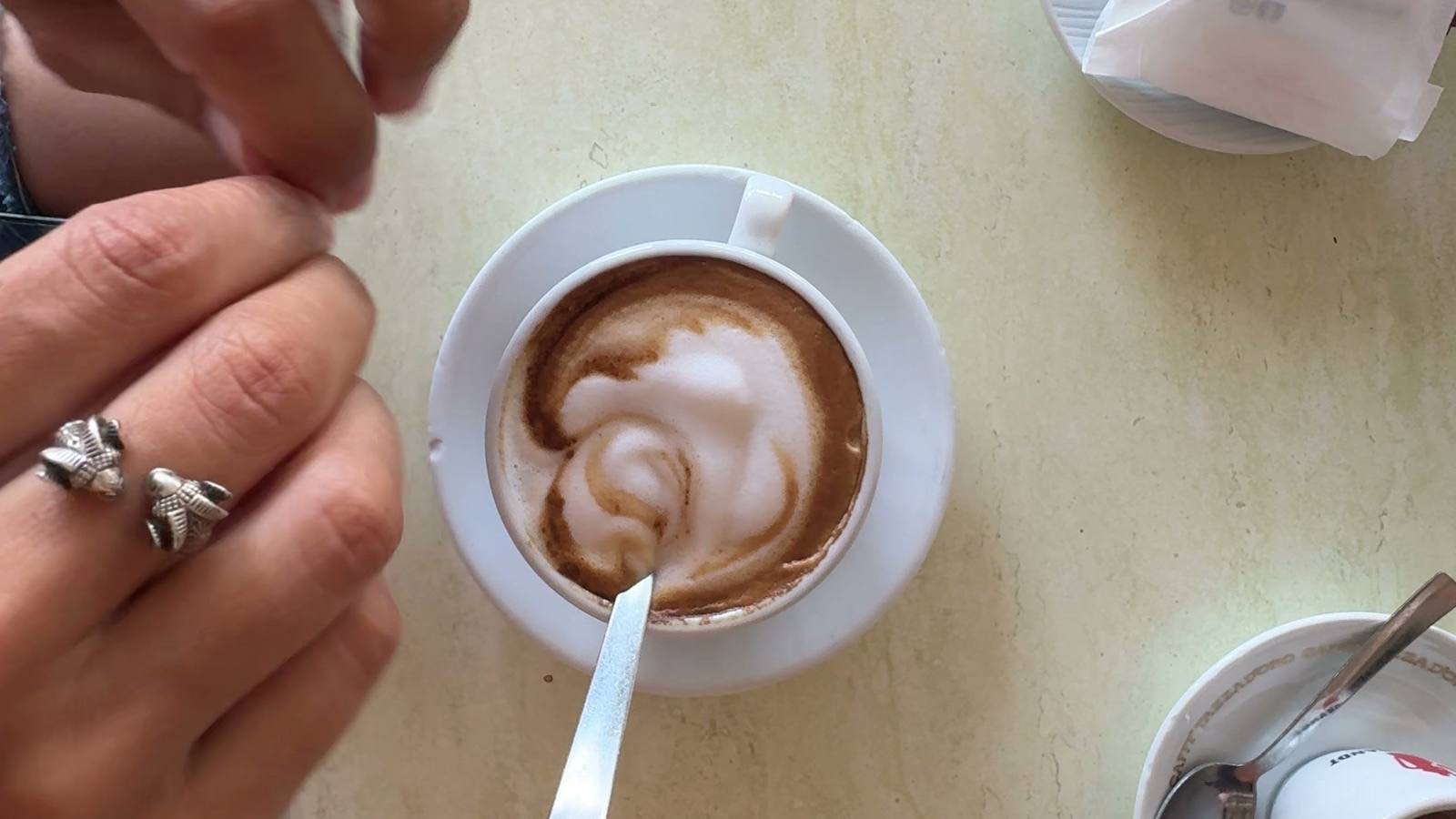
Bars and cafés of every kind work differently again, and here too a tip is not expected — and neither, this time, is a coperto. If you are sitting at a little table enjoying a drink, you are free to leave the change as a tip, but once more it is entirely up to you; nothing is owed. What you should not be charged at a bar is a coperto. There is, though, one real difference to be aware of, and it is not a trick: the price is often higher for what you take sitting at a table than standing at the counter. That is table service, and it is perfectly legitimate — it will be written on the menu, or the difference in price otherwise made clear. So an espresso taken standing at the bar, the Italian way, costs a little less than the same cup brought to your table in the sun. Both are entirely fair; now you simply know why.
Guides and tour leaders
For a tour guide, a tip is entirely at your discretion — and it is a nice thing to do, above all when your guide has been particularly good, particularly attentive. It happens often, and there is a human reason it is appreciated: your guide is frequently a young man or woman, and an extra something can genuinely help. In principle the guides are already paid properly and nothing is owed. But it is worth understanding that this is largely work “on call” — without, most of the time, any guarantee of a steady number of engagements — so a tip, while never required, is a kindness that lands well.
The same goes for a tour leader — the young man or woman who accompanies you for several days of a trip, and who, if they are attentive and professional and good at what they do, has quietly made your journey better. As with the guides, these are usually people without fixed, certain engagements; the work comes and goes. So recognising a few good days with a tip is a generous and welcome gesture — not an obligation, simply a nice one.
Taxis and private drivers
For a taxi — an ordinary urban ride, or the run to and from the airport — it is simply not the custom to tip. You round up if you like, but nothing is expected. A private driver who accompanies you for a few days is a different matter, and here the logic is the same as for the tour leaders: a tip is appreciated. It is not obligatory, but in the travel world it has become fairly common, for exactly the reasons I have given — it is work without guarantees, and a good driver who has looked after you well is worth the gesture.
So — the whole of it, briefly
Hold on to the one thing that frees you from the worry: in Italy the tip is not built into the price of anything, so you are never failing an obligation by not leaving one. Pay the clear menu price and the coperto, and you have paid in full. Beyond that, a tip is yours to give when you have been genuinely well looked after — a fine restaurant, a wonderful guide, a driver who made the days easier — as a thank-you, freely, and never as a duty. And in the places that try to make it a duty, keep your eyes open and walk on. Because knowing Italy, really knowing it, is partly a matter of knowing which doors to walk straight past.
Steering you toward the places that treat you well — and quietly away from the ones that don’t — is a good part of what we do, so that everything from the great sites to a simple lunch is the real Italy, and never the trap.
Request a free consultation →